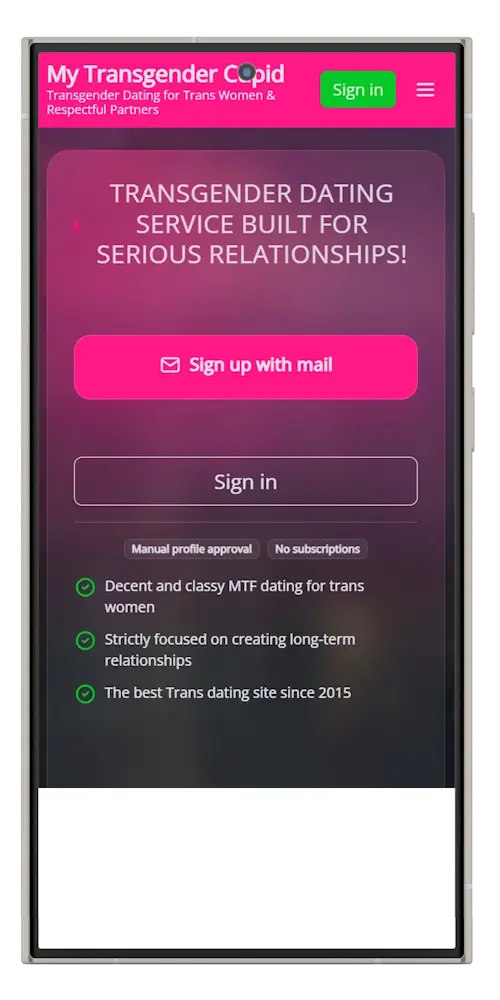
Relationship-first transgender dating with manual profile approval and fast block/report tools.
The safe transgender dating site for trans women and respectful partners. Sign up free for trans dating and start meeting compatible singles today.
This page is a city-level guide for Trans dating in Syracuse, focused on respectful choices you can actually use. It’s written for people who want meaningful dating without guesswork, while keeping privacy and boundaries front and center. You’ll get planning rules for timing, messaging, and first meets that fit how Syracuse life really runs.
MyTransgenderCupid helps you state your intent clearly, filter for meetable matches, and move from chat to a simple plan with less stress. Whether you’re near University Hill or you’re closer to Eastwood, the goal is the same: calm pacing, clear consent, and a date that feels safe for both people.
You don’t need perfect lines or a “big city” approach here; you need a steady process you can repeat. Use this guide to keep your standards high, spot chaser behavior early, and build momentum without burning out.
When your week is busy, a simple routine is more reliable than bursts of effort. This quick-start plan keeps you focused on quality so you don’t spiral into endless swiping. Each step is designed to create clarity, reduce awkwardness, and protect your privacy from day one.
Keep the pace steady instead of intense, even if you’re excited. If you’re in Tipp Hill one night and Downtown the next, your routine stays the same: clarity first, then meetability, then a low-pressure plan. You’ll get better matches by saying less, but saying it more clearly.
In a smaller-feeling city, it helps to lead with respect before you lead with curiosity. Attraction is normal, but objectifying language turns trust into tension fast. Use the first few messages to confirm pronouns, pacing, and what “serious” means to each of you, without pushing for personal details too soon.
What this isn’t: an interrogation about someone’s past, body, or medical history. If you can’t say it comfortably in Armory Square with people around, don’t say it in a DM. Calm pacing is not “playing games”; it’s how safety and chemistry grow together.
A sweet Syracuse move is to suggest a short, low-pressure walk near Onondaga Lake after a good chat, then keep it simple: one coffee, one conversation, and a clear “no rush” vibe.
~ Stefan
Small distances can still feel big when the route is annoying or the day is packed. The goal is to plan around time, not miles, and pick windows that don’t create pressure. A good plan feels easy to say yes to, even on a weekday.
Weeknights often work best with a tight time box and a clear start time, especially if one of you is coming from University Hill after a long day. Weekends can support a longer hang, but it still helps to start with something short so nobody feels trapped. If you’re meeting across town, agree on a midpoint and treat it like a first-round test of comfort, not a full “date marathon.”
Make “close” mean a real rule: one simple route, one easy parking plan, and a finish time you both respect. Budget-friendly can still be intentional; a thoughtful plan beats a fancy plan every time. If you’re unsure, choose the option that gives both of you the easiest exit and the least stress.
When you’re dating with intention, structure matters more than volume. The platform is built around profiles that explain who you are and what you want, so you can choose based on fit instead of vibes alone. Used well, filters and shortlists help you avoid burnout and focus on people you could realistically meet.
A strong profile does two jobs at once: it attracts the right people and quietly repels the wrong ones. In Syracuse, it helps to be specific about pace and meet style, because ambiguity invites pressure. Keep your tone warm, but make your boundaries obvious so you don’t have to defend them later.
Add one or two hooks that make replying easy, like a favorite low-key activity or a “small win” you’re proud of. If you mention Westcott in a casual way, it can also signal you’re local without oversharing. The goal is to make the next step feel simple and respectful.
The fastest way to build trust is to be consistent, not intense. Keep early messages short, ask one good question at a time, and avoid pushing for proof or personal history. If the vibe is good, shift toward a simple plan rather than endless chatting.
Try these five openers: 1) “Your profile felt thoughtful, what are you hoping this turns into?” 2) “What does a good first meet look like for you?” 3) “What’s a small thing that helps you feel respected while dating?” 4) “I’m free for a short meet this week, what days are best for you?” 5) “What’s your ideal pace: chat a bit, then plan, or plan sooner?”
Follow-up timing rule: one check-in after 24–48 hours is fine, then let it breathe if there’s no reply. Invite template: “If you’re comfortable, want to do a 60–90 minute first meet this week, public and easy, with an early end time?” Avoid sexual comments, “are you pre/post” questions, or anything that makes the conversation feel like a test.
When someone responds with steady energy and clear boundaries, mirror that pace. If they pressure you, treat it as data, not drama. In many cases, the kindest move is simply to step back and keep your standards intact.
Moving offline works best when the plan is small, specific, and reversible. Keep the first meet short enough that both people can relax, especially if you’re coming from different parts of town. A good first meet is about comfort and conversation, not impressing anyone.
Arrive separately, keep the first meet in a public setting, and plan an easy exit. If the connection is strong, save the longer date for the second time. That’s how you protect chemistry and safety at the same time.
The most reliable way to meet good people is to put shared interests first and let the connection grow naturally. Look for community calendars, hobby groups, and low-key public settings where conversation is easy. If you’re new to the scene, going with a friend can make the first few outings feel more comfortable.
Keep it simple with a public walk that has natural “pause points” for conversation. If you’re near Onondaga Lake, you can treat it as a first-meet format rather than a big outing. Aim for 60–90 minutes and end while it still feels good.
Choose a recurring group where the goal isn’t dating, like arts, books, fitness, or volunteering. This keeps the vibe consent-forward and removes pressure from the start. You’re building familiarity, not “hunting,” and that shows in how you behave.
Pick a public spot where it’s normal to keep things short and friendly. If one of you is closer to Franklin Square and the other is near University Hill, meet halfway and keep logistics easy. The point is to test comfort, not to perform.
In Syracuse, a practical win is to pick a midpoint that’s easy to park near, keep the first meet time-boxed, and choose a plan that lets both people leave smoothly without awkward explanations.
~ Stefan
Start with a clear profile and a small shortlist, then message only when you can follow through. A simple plan beats endless chatting, especially when schedules are real.
When you screen early, you protect your time and your peace. Red flags are usually about pressure, secrecy, or disrespect, not “bad chemistry.” If something feels off, you don’t need a debate; you need an exit that stays calm and safe.
Green flags look like steady replies, respectful curiosity, and a willingness to meet in a public place with clear timing. Exit script: “I don’t think we’re a fit, but I wish you well,” then stop engaging if they push. The safest choice is the one that reduces contact, increases distance, and keeps you in control.
If your best matches aren’t right in your immediate radius, widening your search can help, as long as meetability stays realistic. Use the hub below to compare nearby cities and decide what “drivable” means for you. You can keep your standards the same while adjusting your distance settings.
If you expand outward, keep your boundaries and your planning rules the same. A longer drive can still be worth it when the intent is aligned and the meet plan stays simple. Just make sure distance doesn’t become a reason to rush or to compromise on safety.
For many people, it works best to treat farther matches as “weekend meets” and local matches as “weekday meets.” If you’d rather stay local, keep your radius tighter and focus on stronger profiles instead of more profiles. Either way, consistency is what creates momentum.
Sometimes the next step is simply refining your process, not trying harder. Use this section to keep your approach calm: one short shortlist, a few solid messages, and a plan you can actually follow through on. When you stay consistent, your matches tend to get better over time.
Pick a distance setting that matches your real week, not your ideal week. If you won’t drive on a weeknight, don’t pretend you will. Meetability creates trust before you even message.
Disclosure is personal, and nobody owes details on a timeline. Ask better questions about values, boundaries, and plans. If someone pushes, step back early and keep your standards.
Kind endings prevent messy endings. Use one short line, then disengage if the person argues. Your safety and comfort matter more than “winning” a conversation.
If you’re open to a wider radius, the hub can help you compare nearby cities without losing focus. Keep your intent clear and your first-meet plan simple, then let consistency do the work. You’ll get better outcomes by repeating a calm process than by chasing quick sparks.
Before you meet, choose a public place, keep it time-boxed, use your own transport, and tell a friend, then review these safety tips before you go.
These answers focus on practical decisions you can make without overthinking. They’re designed to help you keep respect and privacy intact while still moving toward real plans. If you’re unsure, choose the option that reduces pressure and increases clarity.
Start by asking about intent, pace, and what a good first meet looks like, instead of personal history. Compliment style or vibe rather than bodies, and avoid “proof” language. If you’re unsure, ask permission before any sensitive question.
Pick a midpoint that both people can reach with one simple route, then set a clear end time. If either person has to do a complicated trip, the plan becomes stressful fast. The best halfway plan is the one that makes leaving easy for both people.
Suggest a first meet after you’ve exchanged a few respectful messages and confirmed basic intent and pacing. Keep the plan small and specific: public, time-boxed, and easy to exit. If the person tries to rush you, that’s useful information, not a reason to speed up.
Avoid medical or surgery questions unless the other person invites that topic. Don’t push for legal names, workplace details, or socials right away. Better questions are about boundaries, what respect looks like, and what pace feels comfortable.
If you feel unsafe or harassed, you can prioritize immediate safety and then look for support options in New York. Many people start with trusted friends, then consider community support or professional help if needed. Keeping screenshots and a short timeline can help if you decide to report behavior.
Use the same boundary rules regardless of where someone lives: share details gradually and only when trust is earned. If distance is involved, avoid rushing disclosure just to “make it worth the drive.” A steady pace usually creates better outcomes than a fast one.